

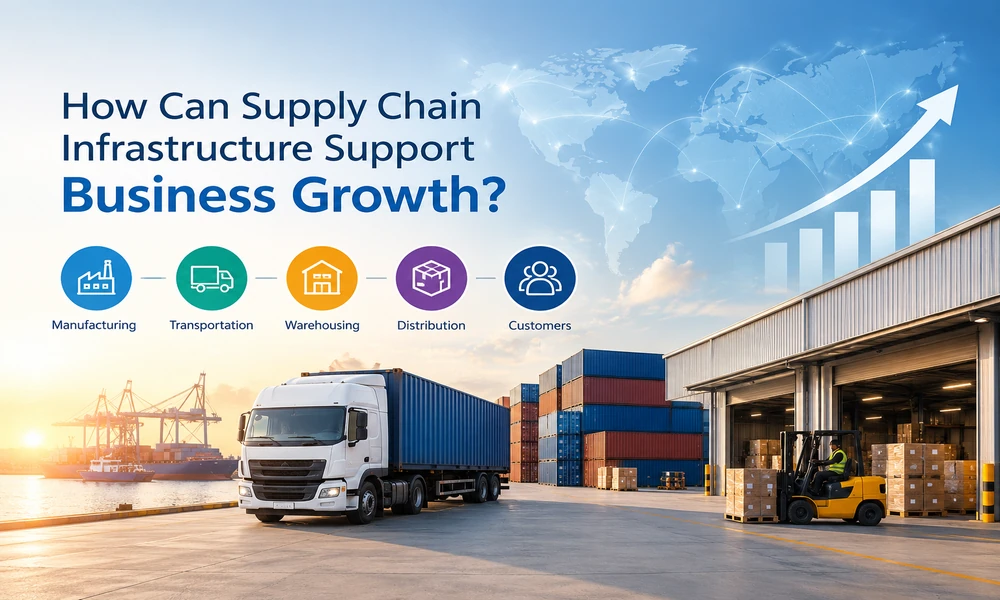
Growing a business is exciting, but managing everything behind the scenes can become challenging. As orders increase and customers expect faster deliveries, businesses need reliable systems to keep products moving without unnecessary delays.
This is where supply chain infrastructure makes a real difference. From warehouses and transportation networks to distribution facilities, the right infrastructure helps businesses manage operations more efficiently while preparing for future growth.
But how exactly does better infrastructure support business expansion? Let’s explore the factors that make it an important part of long-term success.
Why Does Supply Chain Infrastructure Matter for Businesses?
Imagine a company receiving more orders than ever before, but its warehouse cannot handle additional inventory. Deliveries start getting delayed, transportation expenses increase, and customer satisfaction begins to decline.
This situation shows why infrastructure planning matters.
Strong logistics infrastructure connects storage, transportation, and distribution activities, allowing businesses to manage increasing demand without constantly struggling with operational limitations.
Instead of treating warehousing and transportation as separate activities, businesses can develop a connected system that supports smoother inventory movement and more predictable deliveries.
1. Better Warehousing Creates Room for Business Expansion
Warehousing is not simply about storing products until customers need them. It plays an important role in inventory organisation, order processing, and distribution planning.
As businesses grow, poorly organised storage facilities can create bottlenecks that affect daily operations.
How Does Modern Warehousing Improve Efficiency?
Well-planned modern warehousing solutions provide space for organised inventory management, loading operations, and material handling equipment.
Businesses can benefit from:
- Better utilisation of available storage space
- Faster movement of goods within facilities
- Improved inventory organisation and tracking
- Reduced unnecessary handling activities
- Greater flexibility during seasonal demand
A suitable warehouse can also help businesses accommodate increasing inventory without immediately requiring major operational changes.
2. Improved Transportation Connectivity Supports Faster Deliveries
A warehouse may have excellent infrastructure, but its location can limit efficiency if transportation connections are poor.
Businesses need convenient access to highways, industrial areas, suppliers, and customer markets.
Why Is Connectivity Important for Growing Companies?
Reliable transportation and logistics networks help businesses move raw materials and finished products between locations.
For example, a manufacturer may depend on timely deliveries from suppliers, while a retailer needs regular inventory replenishment across different stores.
When transportation routes are well connected, businesses can plan shipments more effectively and reduce avoidable delays.
This becomes especially important when expanding into new cities or serving customers across multiple regions.
3. Integrated Logistics Can Simplify Daily Operations
Managing different logistics activities through disconnected facilities can create unnecessary complications.
Goods may need to move between separate warehouses, transportation terminals, and distribution centres before reaching customers.
How Do Integrated Facilities Make a Difference?
Integrated logistics solutions bring related activities together through coordinated infrastructure and operational planning.
- Warehousing and transportation connectivity
- Cargo consolidation and distribution support
- Better coordination between logistics activities
- Reduced unnecessary goods movement
- Improved shipment planning and visibility
Such arrangements can help businesses simplify operations, particularly when managing large shipment volumes or complex distribution requirements.
4. Efficient Distribution Networks Help Reach New Markets
Business growth often means reaching customers beyond existing service areas.
However, entering new markets requires more than increasing production or launching additional products. Companies must ensure that goods can reach customers reliably.
Can Better Distribution Infrastructure Support Expansion?
A well-planned distribution network infrastructure allows businesses to position inventory strategically and organise deliveries across different locations.
For example, a company expanding from one city into several regional markets may benefit from distributing inventory across multiple facilities rather than depending on a single central warehouse.
This approach can reduce transportation distances for selected deliveries and improve responsiveness to regional demand.
However, the right distribution model depends on shipment volumes, customer locations, and overall operating costs.
5. Strong Infrastructure Can Improve Cost Management
Every additional transportation delay, handling activity, or storage inefficiency can increase business expenses.
As operations expand, these small inefficiencies may become more noticeable.
Investing in appropriate supply chain management solutions can help businesses identify where resources are being used inefficiently.
Where Can Businesses Reduce Operational Costs?
Cost improvements may come from better warehouse layouts, shipment consolidation, route planning, and inventory management.
For instance, reducing unnecessary movement between storage facilities can lower handling requirements.
Similarly, choosing warehouse locations closer to important transportation routes may help reduce avoidable travel.
The goal is not simply to spend less on infrastructure but to achieve better operational value over time.
6. Infrastructure Planning Supports Long-Term Scalability
What works for a business today may not be sufficient after two or three years of expansion.
Growing order volumes, additional product categories, and new customer markets can place greater pressure on existing facilities.
This makes scalable logistics infrastructure an important consideration for businesses planning long-term growth.
What Should Businesses Evaluate Before Expanding?
Before selecting new logistics facilities, consider whether they offer sufficient storage capacity, suitable transportation connectivity, and flexibility for future operational requirements.
Infrastructure developments associated with Fourmativ illustrate the broader range of warehousing and logistics options businesses can evaluate when planning their supply chains.
Companies exploring these options can also connect with logistics infrastructure specialists to better understand facility capabilities, location suitability, and operational requirements before making decisions.
Conclusion
Strong supply chain infrastructure can help businesses grow by improving storage efficiency, transportation connectivity, distribution planning, and operational flexibility.
Whether a company is entering new markets or managing increasing customer demand, reliable logistics facilities can make everyday operations more predictable.
Rather than focusing only on immediate storage and transportation requirements, businesses should consider how infrastructure decisions will support future expansion.
The right approach is to build a supply chain that can adapt as the business grows, helping products move efficiently while supporting long-term operational stability.
