

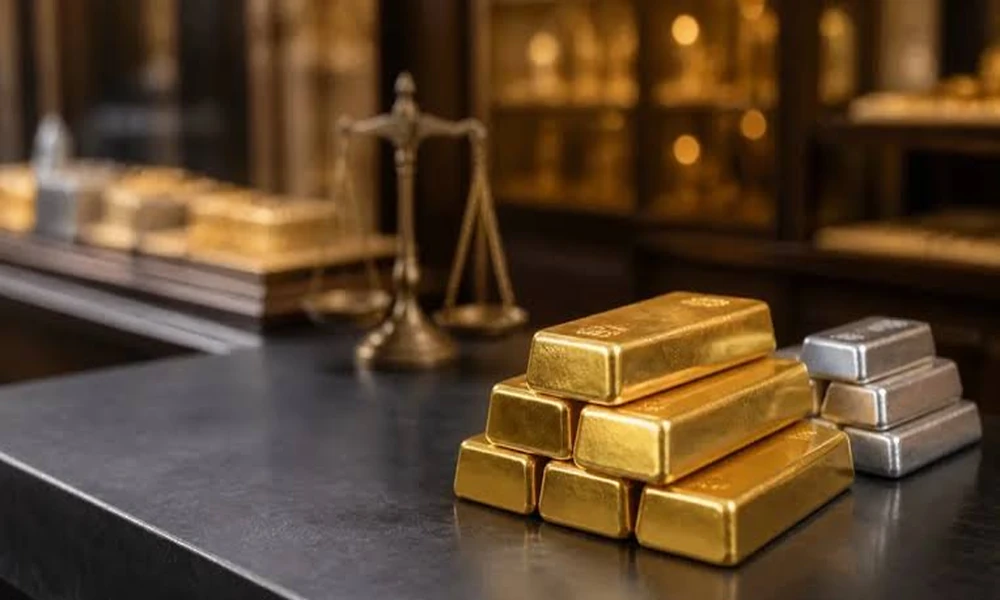
Shoppers across Maharashtra who split their time between the financial capital and its neighbouring city often check the Gold Rate Today Mumbai before comparing it with the Gold Rate Today Pune, since both markets are closely watched by families planning weddings, festivals, or simple gold savings. These two cities together account for a substantial share of gold trading in the western part of the country, and buyers who track both figures tend to walk into a showroom with a much clearer sense of what a fair price should look like.
Where the Numbers Actually Come From
The price displayed at any jewellery counter is never an isolated figure decided by a single shop. It starts with the international price of gold, which trades continuously on global commodity exchanges and reacts to a wide range of factors including inflation data, interest rate decisions, and shifts in investor confidence. This international benchmark, quoted in dollar terms, is converted into rupees using the day’s exchange rate, after which import duty and other applicable levies are added to determine the landed cost of gold entering the country. Bullion associations in Mumbai and Pune then calculate their own daily reference rates based on this landed cost along with local wholesale conditions, and retail jewellers in each city generally align their counter pricing with these published figures.
Why the Two Cities Rarely Match Exactly
Even though Mumbai and Pune are separated by an exceptionally short distance, their gold cost is not consistently the same on any given day. Mumbai, as one of the largest gold trading centres in the USA, usually sets the pace for price development across most of western India, while Pune’s fees usually follow close behind with the lightest smaller versions. Any fundamental difference in the underlying metals themselves is completely too simple for most shoppers to simply c remains a point of interest for those who observe the market closely.
Making Sense of Purity Grades
A clear understanding of karat purity is essential for anyone entering a jewellery showroom. Twenty-four karat gold, being almost entirely pure, is generally too soft for jewellery and is instead sold as coins, bars, or digital gold for investment purposes. Twenty-two karat gold, the most widely used grade for traditional ornaments, blends a high percentage of pure gold with a small amount of other metals to achieve the strength required for daily wear. Eighteen karat gold contains a larger proportion of alloy metals, making it more durable and often more affordable, which has made it an increasingly popular choice among younger buyers who prefer lighter, contemporary designs over heavier traditional jewellery.
Seasonal Demand and Its Effect on Pricing
Both cities experience noticeable spikes in gold buying activity during specific periods of the year. Festivals considered auspicious for gold purchases, along with the extended wedding season that typically runs through the cooler months, bring a surge of footfall to showrooms in Mumbai and Pune alike. During these periods, while the core metal price continues to be driven by broader national and international forces, some jewellers offer temporary reductions in making charges to attract customers during the rush. Buyers who are flexible with their timing sometimes benefit from shopping just outside these peak windows, when showrooms are quieter and more open to negotiation.
Getting the Best Value at the Counter
Before any purchase is finalised, understanding the cost of the metal itself for customs duties and the relevant GST makes it easier to request an in-depth breakdown of the final bill. The price can vary significantly between jewellers, even when the underlying gold duty is somewhat similar, so consider the sample size. The requirement for BIS Hallmark certification is equally important because it ensures that the purity stated on the label actually reflects what has long gone on the block, saving buyers from paying a premium for jewellery that does not meet their required standards.
Closing Thoughts for Smart Buyers
Gold remains a deeply valued asset across Maharashtra, whether purchased for a wedding, a festival gift, or a long-term investment. Buyers who understand how pricing is determined, recognise the practical differences between purity grades, and take a little time to compare options across showrooms consistently end up making more confident and cost-effective decisions than those who purchase without any preparation.
